Tire Blowout on the Highway: How to Stay Safe and Get Help
A tire blowout on the highway happens without warning. One second you’re cruising at 100 km/h on Highway 7/8 or the Conestoga Parkway near Kitchener — the next you hear a deafening bang, your steering pulls violently to one side, and chunks of rubber are flying behind you. It’s terrifying, and what you do in the next 5 seconds determines whether you walk away safely or end up in a much worse situation.
Highway tire blowouts cause thousands of accidents across Ontario every year. Many of them are preventable, and all of them are survivable — if you know how to react. In this guide, we’ll cover exactly what happens during a blowout, the correct emergency response, and how to get professional roadside help in Kitchener when it happens to you.
What Happens During a Tire Blowout?
A tire blowout is a sudden, catastrophic loss of air pressure — very different from a slow puncture that deflates your tire over hours. During a blowout at highway speed, three things happen almost simultaneously:
1. A loud bang or explosion sound — the tire casing ruptures under pressure, releasing air instantly. It sounds like a gunshot and it will startle you.
2. A sudden pull to one side — the deflated tire creates massive drag, yanking your steering wheel toward the blown tire. Front blowouts pull harder than rear ones.
3. A flapping or thumping vibration — the destroyed tire flaps against the wheel well and road surface. Your vehicle will feel unstable and shaky.
The entire event unfolds in under 2 seconds. Your instinct will be to slam the brakes — but that’s the worst thing you can do. Here’s the correct response.
How to React to a Tire Blowout: 6 Steps That Save Lives
If you experience a tire blowout on the highway near Kitchener or anywhere in Ontario, follow these steps exactly:
DO NOT Hit the Brakes
This is the most critical step. Braking during a blowout shifts weight to the deflated tire and can cause you to spin out or lose control entirely. Fight every instinct to stomp the brake pedal.
Grip the Steering Wheel With Both Hands
Hold the wheel firmly at 10 and 2 (or 9 and 3). The car will pull hard toward the blown tire — you need both hands to counteract the pull and maintain your lane.
Gently Press the Gas (Briefly)
It sounds counterintuitive, but a brief, gentle press on the accelerator helps stabilize the vehicle and keeps you moving in a straight line. This prevents the blown tire from dragging the car sideways.
Let the Car Decelerate Naturally
Once you’ve regained steering control, ease off the gas and allow the vehicle to slow down on its own. The flat tire creates enough drag to reduce speed without braking. Only apply gentle brakes once you’re under 50 km/h.
Signal and Move to the Right Shoulder
Activate your turn signal and carefully steer to the right shoulder. Get as far off the road as possible — ideally past the rumble strip and onto the gravel. Never stop in a live lane of traffic.
Turn On Hazard Lights and Call for Help
Once safely stopped, activate your hazard lights immediately. Stay inside your vehicle with your seatbelt on. Call emergency roadside assistance — do not try to change the tire yourself on a highway shoulder.
⚠️ Never Change a Tire on a Highway Shoulder
Ontario’s highway shoulders are some of the most dangerous places to be on foot. Vehicles pass at 100+ km/h just metres away. According to Transport Canada road safety data, roadside incidents involving stopped vehicles result in hundreds of injuries in Ontario annually. Wait for a professional with proper safety equipment — your life is worth more than a tire.
Tire Blowout vs. Flat Tire: What’s the Difference?
Many drivers use “blowout” and “flat tire” interchangeably, but they are very different events that require different responses:
A blowout is always an emergency. A slow flat gives you time to react. If you’re not sure which you’re dealing with, treat it as a blowout until you’re safely stopped. For help with either situation, read our complete guide on breakdown towing in Kitchener.
What Causes Highway Tire Blowouts?
Understanding the causes helps you prevent them. Most tire blowouts are the result of one or more of these factors:
Underinflated Tires
This is the number one cause of blowouts. When a tire is underinflated, the sidewalls flex excessively at highway speeds, generating heat. That heat weakens the rubber until the casing fails. Tire pressure drops about 1 PSI for every 5°C temperature change — a major factor during Kitchener’s extreme seasonal swings from -20°C winters to +30°C summers.
Overloading the Vehicle
Every tire has a maximum load rating printed on its sidewall. Exceeding that weight — by overloading cargo, towing beyond capacity, or carrying too many passengers — puts excessive stress on the tire structure. This is especially common with SUVs and pickup trucks in the Kitchener-Waterloo region during cottage season and home renovation projects.
Worn Tread and Aged Tires
Tires degrade with age even if they have plenty of tread left. The rubber compounds dry out and crack over time, especially when exposed to UV light and temperature extremes. Most tire experts recommend replacing tires that are more than 6 years old regardless of tread depth. Check the DOT date code on your tire sidewall — the last four digits show the week and year of manufacture.
Potholes and Road Hazards
Hitting a deep pothole at highway speed can rupture the tire’s inner liner or crack the sidewall — creating a weak point that fails later during sustained high-speed driving. Ontario’s spring pothole season (March through May) is peak blowout season for exactly this reason.
Extreme Heat
Hot asphalt in July and August heats tires from below while friction heats them from within. This double effect is why blowouts spike during summer road trips. Driving with winter tires still on during summer dramatically increases blowout risk because winter rubber compounds are softer and not designed for heat.
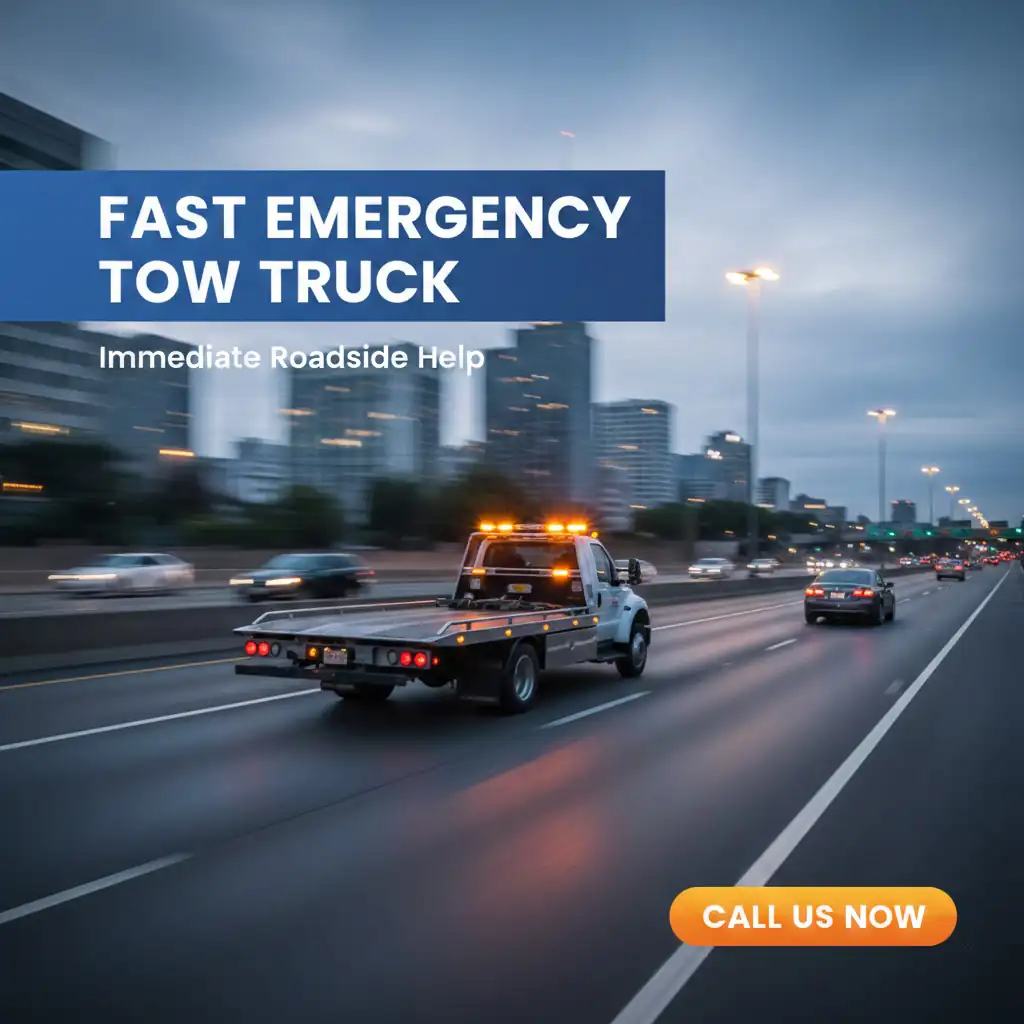
Blowout on the Highway? Stay in Your Car.
We’ll send a truck with the right safety equipment — 24/7 across Kitchener, Waterloo & Cambridge.
Why You Should Never Change a Tire on a Highway
We cannot stress this enough — changing a tire on an Ontario highway shoulder is extremely dangerous. Here’s why professional emergency roadside service is worth every dollar:
- Highway traffic passes at 100+ km/h — vehicles at that speed can drift into the shoulder in a split second, and you won’t have time to react
- Poor visibility — at night, in rain, fog, or blowing snow, other drivers simply can’t see you until they’re dangerously close
- Unstable surface — highway shoulders are often sloped, covered in gravel, or narrow, making jacking unsafe
- Distracted drivers — looking at a phone for 5 seconds at 100 km/h means travelling 139 metres blind
Ontario’s Move Over Law requires drivers to slow down and change lanes when passing stopped vehicles on the highway. But in practice, many drivers don’t comply — which is exactly why professional roadside technicians bring safety cones, flashing amber lights, and high-visibility gear that you don’t have in your trunk.
💡 What About Ontario’s 511 Service?
If you don’t have a towing company saved in your phone, you can call 511 — Ontario’s official road information line — to be connected with an authorized tow operator in your area. However, having a trusted provider like Kitchener’s 24-hour towing already saved means faster service and upfront pricing.
What to Expect From Emergency Tire Repair Service
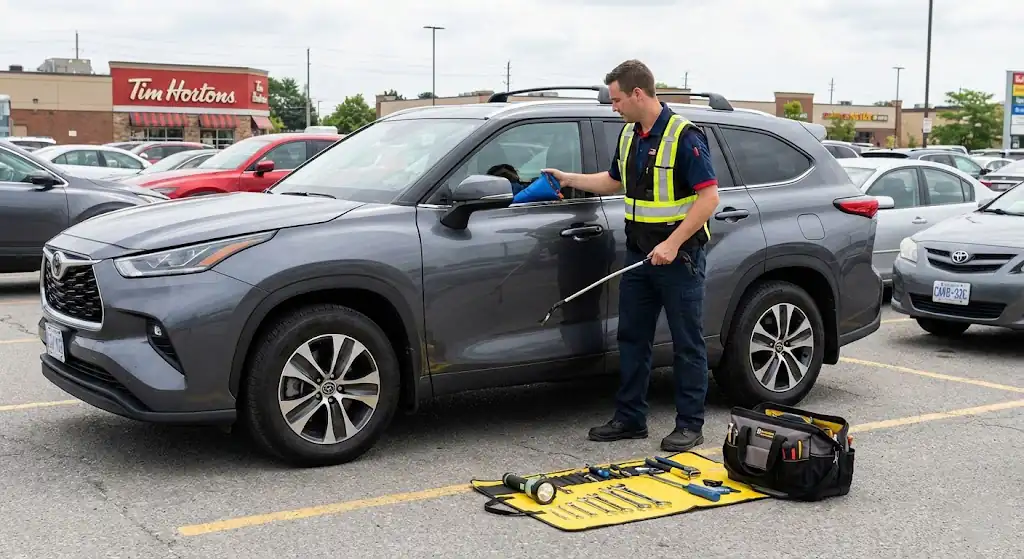
When you call for emergency tire repair after a highway blowout, here’s what a professional service team does:
Arrival with full safety setup — the truck positions behind your vehicle with amber warning lights active, creating a protective barrier between you and highway traffic.
Damage assessment — the technician inspects the blown tire, checks for rim damage, and confirms whether a spare can be installed on-site.
Spare tire installation — using a heavy-duty hydraulic jack and impact wrench, the technician swaps the destroyed tire for your spare. If your vehicle has no spare, they arrange a flatbed tow.
Safety check and send-off — lug nuts are torqued to spec, tire pressure is verified, and you’re given direction to the nearest tire shop for a permanent replacement.
The entire process usually takes 20–30 minutes from the moment the technician arrives. For realistic expectations on response time, read our post on what drivers should realistically expect in emergency situations.
Cost of Emergency Tire Service After a Blowout
A blowout always requires a new tire — there’s no patching a destroyed casing. Here’s what you can expect to pay in total for the service call plus tire replacement:
Check whether your auto insurance includes roadside assistance — it could cover the service call entirely. Read our guide on how to check if your insurance covers emergency towing for details. You can also use our towing cost estimator for a quick ballpark.
7 Ways to Prevent Tire Blowouts
Most tire blowouts are preventable with basic maintenance. These seven habits dramatically reduce your risk:
- Check tire pressure every 2–4 weeks — use a digital gauge and inflate to the PSI listed on your driver’s door sticker, not the maximum printed on the tire itself.
- Inspect for bulges and cracks — run your hand along the sidewall. Any bulging, cracking, or bubbling means the tire is compromised and could blow at speed.
- Replace tires before they’re bald — Ontario’s legal minimum tread depth is 1.5mm, but safety experts recommend replacing at 3mm. Use the quarter test regularly.
- Don’t overload your vehicle — check the maximum load rating on the tire and the vehicle’s GVWR (gross vehicle weight rating) on the door sticker.
- Replace tires older than 6 years — even with good tread, old rubber dries out and becomes brittle. Check the DOT date code on the sidewall.
- Switch to winter tires before November — and switch back in spring. Running winter tires in summer significantly increases blowout risk because the softer compound overheats.
- Avoid potholes and debris — they cause invisible internal damage that can lead to delayed blowouts days or weeks later.
💡 Pro Tip
If you recently hit a bad pothole and notice a new vibration or wobble at highway speed, get your tires inspected before your next long drive. Internal damage isn’t always visible from the outside but can cause a blowout later. A 5-minute check could prevent a highway emergency.
After the Blowout: What to Do Next
Once you’re safely off the highway with a spare installed (or being towed), here’s your checklist:
- Drive to a tire shop immediately — a donut spare is temporary (100 km max at 80 km/h)
- Have the rim inspected — blowouts can bend, crack, or gouge the rim, especially alloy wheels
- Check adjacent tires — whatever caused one tire to blow may have weakened the others
- Get an alignment check — driving on a blown tire (even briefly) can knock your alignment out of spec
- Document the damage — if the blowout was caused by a road defect, you may be able to file a claim with the municipality. Read our guide on what to document at the scene for insurance
If your vehicle has AWD or 4WD, mismatched tires can damage the drivetrain. A flatbed tow to the tire shop is often the safer choice rather than driving on a donut spare.
Kitchener Highways Where Blowouts Happen Most
Based on local roadside call patterns, these Kitchener-area roads see the highest blowout and emergency tire service calls:
- Highway 7/8 (Conestoga Parkway) — highest speed, highest call volume for blowouts between Kitchener and Cambridge
- Highway 401 (at the Hespeler Road interchange) — heavy truck traffic and aging road surfaces
- Victoria Street — potholes are especially bad in spring after freeze-thaw cycles
- Fischer-Hallman Road — ongoing construction zones increase debris risk
- King Street through downtown — streetcar track construction and uneven road surfaces
If you break down anywhere in the Kitchener-Waterloo region, our full range of roadside services has you covered — from tire changes to winching and recovery to battery boosts.
Frequently Asked Questions About Tire Blowouts
What should I do if I have a tire blowout on the highway?
Do not slam the brakes. Grip the steering wheel firmly, briefly and gently press the gas to stabilize, then ease off and let the car slow naturally. Signal and move to the right shoulder. Turn on your hazard lights, stay inside the vehicle, and call for emergency roadside assistance.
Can a tire blowout cause an accident?
Yes. A tire blowout at highway speed causes sudden loss of vehicle control. If the driver overreacts by slamming the brakes or jerking the steering wheel, the vehicle can spin, roll over, or collide with other traffic. Knowing the correct response dramatically reduces accident risk.
Should I change a tire on the side of a highway?
No. Highway shoulders are extremely dangerous places to work on a vehicle. Passing traffic at 100+ km/h creates serious risk of being struck. Stay inside your car with the seatbelt on and call a professional roadside service with proper safety equipment.
What is the main cause of tire blowouts?
Underinflated tires are the number one cause. Low pressure causes excessive sidewall flexing and heat buildup at highway speeds, which weakens the rubber until it fails. Other causes include worn tread, overloading, aged tires, and pothole damage.
How much does emergency tire service cost on the highway?
An emergency roadside tire service call in Kitchener typically costs $75 to $150. Highway locations may include a surcharge of $20 to $50. If a tow is needed, expect $120 to $160 within city limits. A new tire ranges from $100 to $300 or more depending on size and brand.
Can a blown-out tire damage my rim?
Yes. When a tire blows out, the vehicle’s weight drops onto the rim. Even a short distance of driving on a flat can bend, crack, or scrape the rim — especially alloy wheels. Rim damage from a blowout can cost $150 to $500 or more to repair or replace.
How can I tell if my tires are at risk of a blowout?
Warning signs include bulges or bubbles on the sidewall, visible cracks in the rubber, low tread depth (below 3mm), chronic underinflation, tires older than 6 years, and any vibrations or wobbles at highway speed. If you notice any of these, replace the tire before your next highway trip.
Are blowouts more common in summer or winter?
Blowouts are more common in summer. Hot pavement combined with higher driving speeds generates more heat inside tires. Running winter tires during summer also dramatically increases blowout risk because the softer rubber compound is not designed for heat.
Does Ontario’s Move Over Law protect people stopped with a flat tire?
Yes. Ontario’s Move Over Law requires drivers to slow down and move over one lane when passing stopped vehicles with flashing lights on the highway shoulder. However, compliance is inconsistent, which is why staying inside your vehicle and waiting for professional help is the safest approach.
What number do I call for highway tire help in Ontario?
In the Kitchener-Waterloo area, call (226) 476-0477 for 24/7 emergency tire service. You can also dial 511 — Ontario’s road information line — to be connected with an authorized tow operator. CAA members can call their dedicated roadside assistance number.
Highway Emergency? We Respond 24/7.
Professional roadside tire service with full safety equipment.
Kitchener • Waterloo • Cambridge • Highway 7/8 • 401