

How Much Can a Tow Truck Legally Charge in Ontario?
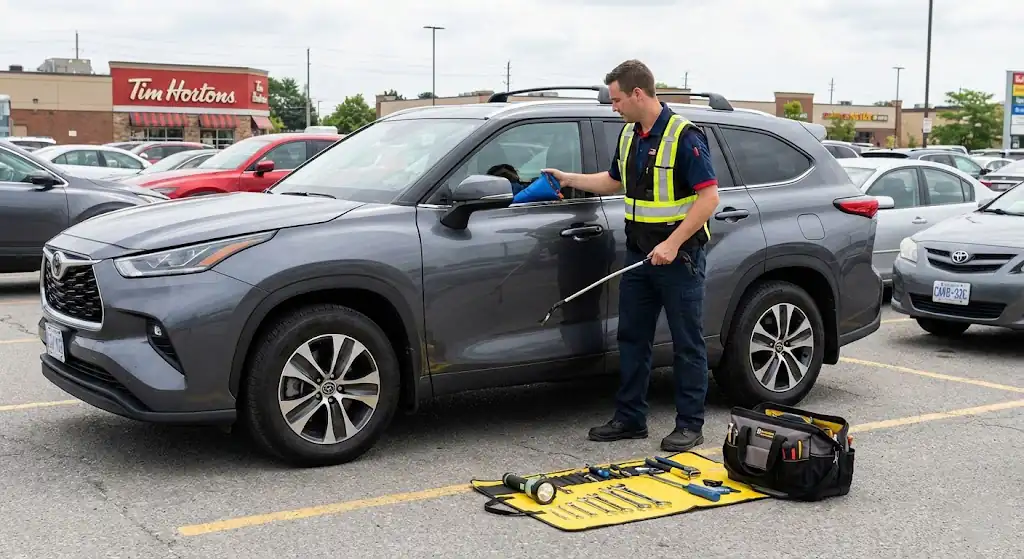
You just got a $325 tow bill for what seemed like a simple flatbed tow across Kitchener. Is that normal? Is it legal? Could you have been overcharged? Before Ontario’s Towing and Storage Safety and Enforcement Act (TSSEA) took effect in 2024, answering those questions was nearly impossible — there was no province-wide towing rate regulation. Every municipality had its own rules (or none at all), and tow operators could charge almost whatever they wanted.
That’s changed. Under the TSSEA, every tow operator in Ontario must now file a maximum rate schedule with the provincial government. They cannot exceed those rates, and you have the right to see the schedule before agreeing to any tow. This guide explains how the legal rate system works, what each towing rate category covers, what “extras” operators can and cannot charge, and how to dispute a bill you believe is too high.
For transparent, upfront pricing in Kitchener, call (226) 476-0477 or use our towing cost estimator. For a detailed breakdown of typical prices in the area, see our Kitchener towing rates explained page.
The 3 Legal Towing Categories in Ontario
As of November 2025, Ontario’s TSSEA rate structure divides all towing services into three categories. Each category has its own set of allowable charges and billable items. Here’s what each covers:
💡 How to Check the Legal Rate
Every tow operator’s maximum rate schedule is filed with the Ontario Ministry of Transportation. You have the right to request a copy of any operator’s filed schedule before agreeing to service. If they refuse to show it, that’s a red flag.
What Can (and Cannot) Be Charged
Understanding which charges are legitimate — and which are prohibited — helps you spot overcharging immediately. Here’s the breakdown:
The golden rule: if it’s not on the consent form you signed, they can’t charge for it. Any charge added after the fact that wasn’t in the original written agreement is a violation of the TSSEA. Keep your consent form and invoice for your records. For a deeper dive into your rights, see our comprehensive guide on Ontario towing laws and your driver rights.
Typical Towing Costs in Kitchener (2026)
While legal maximums vary by operator, here are the realistic price ranges Kitchener drivers can expect:
These are typical market rates, not legal maximums — the legal maximum is whatever the specific operator has filed with the Ministry. Some operators file higher rates. The only way to know is to ask for their rate schedule before signing the consent form. For a personalized estimate, use our towing cost estimator or read the full Kitchener tow truck cost guide.
Fair, Legal, Upfront Pricing — Every Time.
Our rates are filed with the Ministry and confirmed before dispatch. No surprises.
How Per-Kilometre Towing Charges Work
One of the most common questions Kitchener drivers ask is “how much does towing cost per km?” The answer depends on the operator’s filed rate, but here’s how the structure typically works:
- Base fee — covers the dispatch, hookup, and a set number of included kilometres (often 5–10 km). This is the minimum charge even for very short tows.
- Per-km charge — applied for every kilometre beyond the base distance. Typical range: $3–$5/km. Some operators have a flat rate for the first 10 km then a per-km rate beyond.
- Long-distance towing — for tows exceeding 50–100 km (such as Kitchener to Toronto), many operators offer a negotiated flat rate instead of per-km charges. Always ask for a flat-rate quote on long distances.
Example: A basic tow from Downtown Kitchener to a mechanic in Waterloo (about 8 km) might include 5 km in the base fee ($75) plus 3 extra km at $4/km ($12), totalling $87. The same tow to a mechanic in Cambridge (about 25 km) would add 20 extra km at $4/km ($80), totalling $155. For exact pricing, call (226) 476-0477 with your pickup and drop-off locations.
How to Dispute an Overcharge
If you believe a tow operator charged you more than their filed maximum rate, here’s what you can do:
- Review your consent form and invoice — compare the charges on your invoice against what was agreed on the consent form. Any charge not on the consent form is a potential violation.
- Request the operator’s filed rate schedule — you have the right to see it. Compare your invoice charges against their maximum rates for the category of tow you received.
- Request a refund directly from the operator — under the TSSEA, if an operator charges more than their filed maximum rate, they are required to refund the excess amount.
- File a complaint with the MTO — if the operator refuses to refund the overcharge, visit the Ontario consumer complaint portal and submit your evidence (consent form, invoice, receipt, photos of the tow truck and its certificate number).
- Contact your credit card company — if you paid by credit card and the operator refuses to resolve the overcharge, you may be able to initiate a chargeback through your credit card provider.
Keeping your consent form, invoice, and receipt is critical for any dispute. Take a photo of the tow truck — including its TSSEA certificate number displayed on the exterior — before the tow begins. For help navigating insurance claims alongside towing disputes, read our guide on working with your insurance adjuster.
7 Red Flags That You’re Being Overcharged
Watch for these warning signs that a tow charge may not be legitimate:
For tips on finding a trustworthy, fairly-priced tow company, read our affordable towing in Kitchener guide. Our full services include flatbed towing, emergency towing, and roadside assistance — all with 24/7 availability. For insurance-covered tows, see our insurance towing page and our guide on how insurance covers towing. Check response time expectations before calling.
Frequently Asked Questions
How much does a tow truck charge per km in Ontario?
Per-kilometre charges in Ontario typically range from $3 to $5 per km beyond the included base distance. The exact rate depends on the operator’s filed maximum rate schedule with the Ministry of Transportation. Most operators include 5 to 10 km in their base hookup fee before per-km charges apply.
Is there a maximum towing rate in Ontario?
Yes. Every tow operator must file their maximum rate schedule with the Ministry of Transportation and cannot exceed those rates. The Ministry can reject rates deemed unreasonable. You can learn more about operator requirements on the Ontario towing requirements page. While there is no single province-wide cap number, each operator’s filed schedule acts as their legal maximum.
How much does a basic tow cost in Kitchener?
A standard basic tow within Kitchener city limits typically costs $75 to $150 during daytime hours. Flatbed tows run $100 to $200. After-hours and weekend surcharges add $25 to $50. Accident recovery tows fall under the Intermediate category and range from $150 to $350.
Can a tow company charge whatever they want in Ontario?
No. Under the TSSEA, operators must file their maximum rates with the Ministry of Transportation and cannot charge more than those filed amounts. If they charge above their maximum rate, they are required to refund the excess and may face enforcement action from the Director of Towing.
How do I know if I was overcharged for a tow?
Compare your invoice against the consent form you signed and the operator’s filed rate schedule. If any charge exceeds the filed rate, was not on the consent form, or was added after the service, you may have been overcharged. Request the operator’s rate schedule if you do not already have it.
What should I do if a tow company overcharged me?
First, request a refund of the excess amount directly from the operator — they are legally obligated to refund overcharges under the TSSEA. If they refuse, file a complaint with the Ontario Ministry of Transportation through their online consumer complaint portal. You may also be able to initiate a credit card chargeback if you paid by card.
What are the three towing categories under the TSSEA?
Basic Towing covers standard flatbed or wheel-lift tows with no complications. Intermediate Towing covers collision recovery, winch-outs, and situations requiring additional effort. Advanced Towing covers heavy-duty vehicles, complex multi-vehicle recoveries, and specialized operations. Each category has its own set of allowable billable items and rate limits.
Can a tow truck driver refuse to show me their rates?
No. You have the right to see the operator’s filed rate schedule before agreeing to service. If the driver refuses to show the schedule, do not sign the consent form and call a different tow company. Refusal to provide rate information is a violation of the TSSEA.
Do tow companies have to accept credit cards in Ontario?
Yes. The TSSEA requires tow operators to accept multiple payment methods including commonly used credit cards, debit cards, and cash. Any operator who demands cash-only payment is violating the law and should be reported to the Ministry of Transportation.
How much does vehicle storage cost per day in Kitchener?
Vehicle storage in the Kitchener area typically costs $30 to $60 per day. Storage operators must also file their maximum rates with the Ministry and cannot exceed those amounts. Fees accumulate daily, so retrieving or moving your vehicle promptly minimizes total storage costs.
Transparent Pricing. No Hidden Fees. Ever.
TSSEA-certified. Rates confirmed before dispatch. Itemized invoices on every call.
Kitchener • Waterloo • Cambridge • 24/7/365