
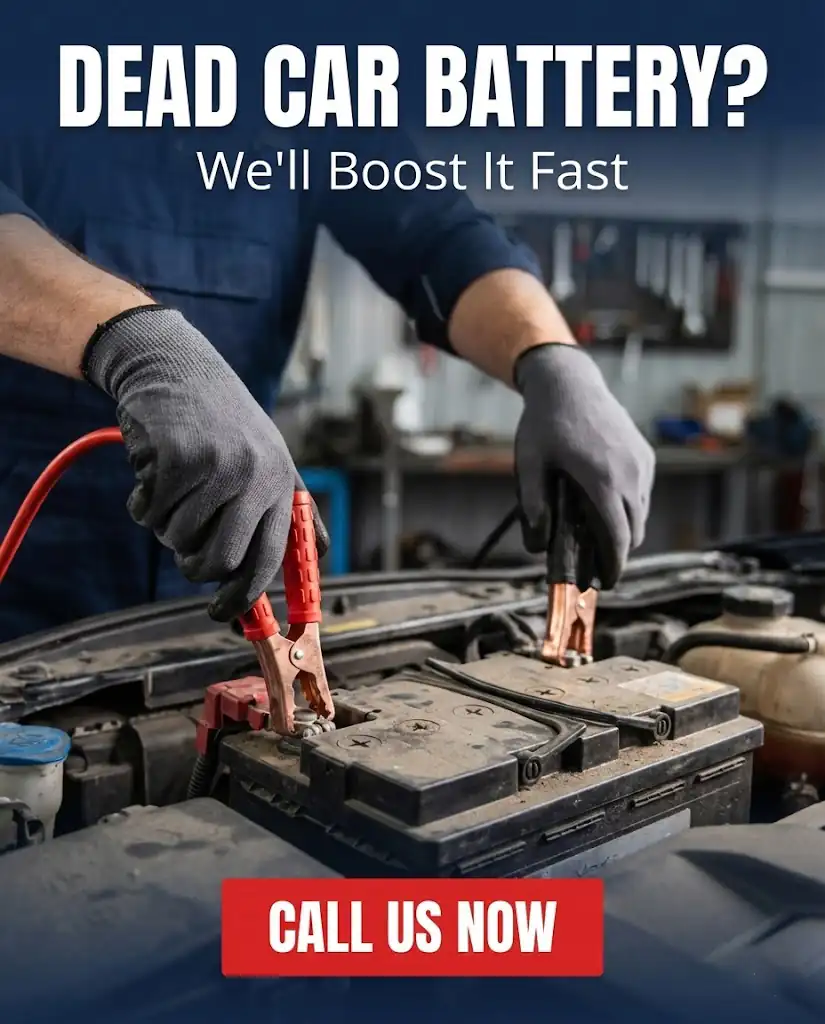
Car Battery Replacement vs. Boost: Which Do You Actually Need?
Every Kitchener driver with a dead battery faces the same question — do I pay $75 for a boost or $200+ for a car battery replacement? This guide gives you the answer in 60 seconds.
Your car won’t start. You get a boost, drive to work, and everything seems fine — until it happens again three days later. Now you’re wondering: do I need a car battery replacement, or is a boost all I really need? It’s a question Kitchener drivers face thousands of times every winter, and choosing wrong costs money either way.
Paying for a new battery when the existing one is fine wastes $150–$350. But boosting a dying battery over and over wastes $75–$100 per call and risks leaving you stranded in a worse location next time. The key is knowing which situation you’re in — and this guide gives you the tools to figure that out.
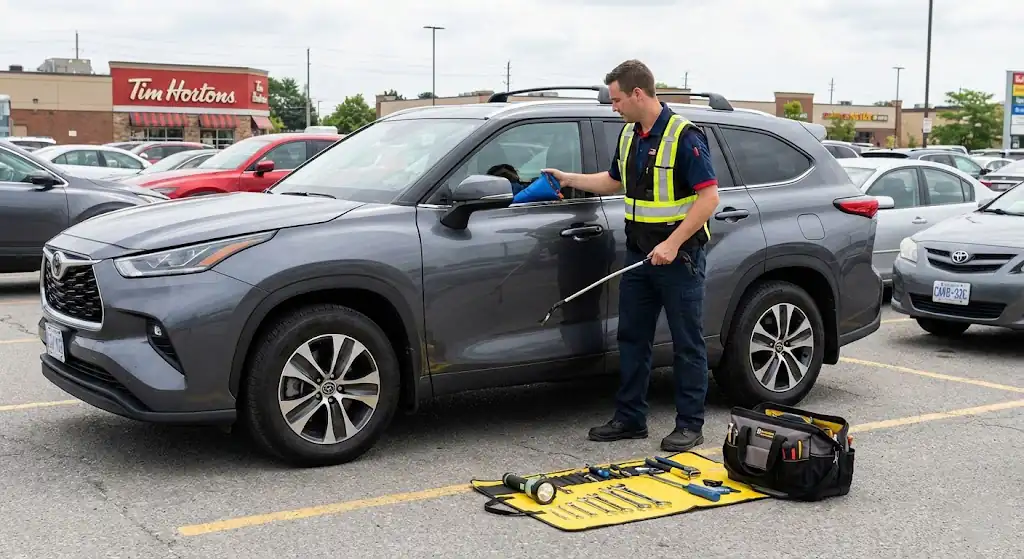
Whether you need a quick boost or a full replacement, our mobile battery service in Kitchener can diagnose the problem roadside and help you make the right call. If you already know what you need, call (226) 476-0477 for 24/7 dispatch.
When a Battery Boost Is All You Need
A battery boost recharges your dead battery using a professional power pack, getting your engine running in minutes. It’s the right choice when the battery itself is healthy but was drained by an external cause. Here are the situations where a boost is the fix:
You Left the Lights On
Dome lights, headlights, USB devices, or a dashcam drained the battery overnight. The battery is perfectly healthy — it just ran out of charge. A single boost and a 20-minute drive fully resolves this.
The Car Sat Parked for Two or More Weeks
Batteries self-discharge, and modern vehicles have electronics that draw small amounts of power even when off. Two weeks of sitting can drain a healthy battery below starting threshold. One boost brings it back.
A Sudden Cold Snap Drained a Healthy Battery
Extreme cold reduces battery output by 50% or more. Even a battery in good health can fail during a -25°C cold snap, especially if it wasn’t fully charged. A boost plus a long drive to recharge is usually enough.
The Battery Is Less Than 3 Years Old
A battery under 3 years old that dies once is almost certainly suffering from an external drain, not internal failure. Boost it, drive it, and monitor. If it happens again soon, then investigate further.
A professional battery boost service costs $60–$100 in Kitchener and takes about 10 minutes once the technician arrives. For a complete walkthrough, read our guide on how roadside battery boost works.
When It’s Time for a New Battery
A car battery replacement is the right call when the battery has internally degraded past the point of reliable operation. Boosting a failing battery is a temporary fix that costs you money every time and leaves you at risk of being stranded again. Here are the signs that replacement is overdue:
The Battery Is 4 or More Years Old
Car batteries in Canadian climates last 3–5 years on average. After 4 years, internal plate degradation accelerates and failure can happen without warning. If yours is over 4 years old and has died even once, replace it proactively.
You’ve Needed Multiple Boosts This Season
One boost is normal. Two in a month is a pattern. Three means the battery can’t hold a charge and each boost is wasted money. At $75–$100 per boost, two or three calls already exceed the cost of a new battery.
The Battery Dies Again Within 48 Hours of a Boost
If the battery can’t hold a charge for even two days after a full boost and a 20+ minute drive, the internal cells have failed. No amount of boosting will fix this — the battery must be replaced.
The Battery Casing Is Swollen, Cracked, or Leaking
A physically damaged battery is a safety hazard. Swelling indicates internal failure and overheating. Leaking means acid is escaping. Do not attempt to boost — call for a flatbed tow to a mechanic for safe replacement.
The Battery Warning Light Stays On While Driving
A persistent battery icon on the dashboard while the engine is running usually means the alternator isn’t charging the battery. This needs professional diagnosis — it could be the alternator, the battery, or both. Either way, a boost won’t solve it.
The Cost Math: Boost vs. Replacement
Here’s where the decision becomes clear. Let’s compare the total cost of repeated boosts vs. a one-time battery replacement:
The break-even point is almost always at two boosts. If you’ve paid for two boost calls ($150+) and the battery is still unreliable, a full replacement at $200–$350 is the smarter investment — plus you get 3–5 years of worry-free starts. Use our towing cost estimator for specific pricing.
Not Sure If You Need a Boost or Replacement?
We’ll test your battery roadside and tell you exactly what you need — no upselling.
How a Roadside Battery Test Works
The fastest way to answer the boost-vs-replace question is a professional battery test. Here’s what a technician checks when they arrive:
- Voltage reading — a healthy, fully charged 12V battery should read 12.4–12.7 volts. Below 12.2V indicates low charge. Below 11.9V suggests internal cell damage.
- Load test — the technician applies a load that simulates engine cranking. A healthy battery maintains at least 9.6V under load for 15 seconds. If it drops below that, the battery is failing.
- Cold Cranking Amps (CCA) — this measures how much power the battery can deliver in cold conditions. If the tested CCA is significantly lower than the rated CCA on the battery label, it’s degraded.
- Visual inspection — corroded terminals, a swollen case, or acid residue all point to a battery that needs replacing regardless of voltage readings.
- Alternator check — the technician also checks that the alternator is charging properly (13.5–14.5V while the engine runs). A bad alternator will kill even a brand-new battery within weeks.
Most battery boost services in Kitchener include a basic voltage and health test as part of the service call. For more on the warning signs that precede battery failure, read our guide on the 5 warning signs your car battery is about to die.
What Does a New Battery Cost in Kitchener?
Battery replacement pricing depends on your vehicle type and the battery’s Cold Cranking Amp rating. Here’s the current range for battery replacement near me in the Kitchener–Waterloo area:
💡 Where to Get a Battery Replaced in Kitchener
Independent mechanics, Canadian Tire, NAPA Auto Parts, and dealerships all offer car battery replacement in Kitchener. For the best value, call ahead to confirm the price includes installation and old battery core disposal. Check our rates guide if you need a tow to the shop.
Could It Be the Alternator, Not the Battery?
This is the third possibility that catches many drivers off guard. A failing alternator stops charging the battery while the engine runs — so the battery slowly drains over a few days until it can’t start the car. The confusing part: a boost works every time, making you think the battery is the problem.
Here’s how to tell if the alternator is the culprit:
- Battery warning light on while driving — this is the most reliable indicator. The light means the charging system isn’t working.
- Dim headlights while idling — if headlights brighten when you rev the engine and dim at idle, the alternator may be undercharging.
- Brand-new battery dies within weeks — if you just replaced the battery and it’s already dead, the alternator is almost certainly the issue.
- Whining or grinding noise from under the hood — a failing alternator bearing produces a distinctive high-pitched whine that increases with engine RPM.
Alternator replacement runs $400–$800 including parts and labour. If this is the issue, you’ll need a tow to a mechanic — a boost will only get you there temporarily. Our breakdown towing service can transport your vehicle directly to your preferred mechanic across the Kitchener–Waterloo area.
How to Check Your Battery’s Age
Battery age is the single best predictor of whether you need a replacement. Here’s how to check:
- Look for a date sticker or stamp on top of the battery. Many manufacturers use a letter-number code — the letter represents the month (A=January, B=February, etc.) and the number represents the year (4=2024, 5=2025).
- Check your last service record — if you’ve had the battery replaced at a shop, the date should be on your invoice.
- If it’s the original battery, check your vehicle purchase date. The battery was likely manufactured within 6 months of when you bought the car.
- Ask at any auto parts store — Canadian Tire, NAPA, and PartSource will read the date code for free and test the battery while they’re at it.
💡 The 4-Year Rule
If your battery is over 4 years old and you’re heading into a Kitchener winter, replace it preemptively. A $200 planned replacement in October is far cheaper and less disruptive than a $100 emergency boost at 6 AM in January followed by a $200 emergency replacement anyway. You can check for any recall notices on your vehicle at the Transport Canada vehicle recalls database.
Does Insurance Cover Battery Replacement or Boost?
This depends on what coverage you have:
Read our detailed guide on how car insurance covers emergency towing to check your specific policy. If you need help filing a roadside claim, our insurance towing service handles paperwork directly with your insurer.
Kitchener Battery Service: Areas We Cover
Our mobile battery boost and towing-to-replacement service covers every part of the Waterloo Region:
Call our 24/7 team for a boost, battery diagnosis, or tow to a mechanic. One truck handles everything so you don’t need to call multiple services. Our emergency towing covers the full region, and you can learn more about typical wait times in our post on realistic emergency response times. For our full service list, visit our services page, and check our affordable towing tips for ways to keep costs down.
Frequently Asked Questions
How do I know if my car battery needs to be replaced?
The strongest indicators are the battery’s age (over 4 years in Canadian climate), requiring multiple boosts in a short period, the battery dying again within 48 hours of a boost, a swollen or leaking casing, or a persistent battery warning light on the dashboard while driving.
How much does it cost to replace a car battery in Kitchener?
Battery replacement in Kitchener typically costs $150 to $350 installed, depending on your vehicle type and the battery’s Cold Cranking Amp rating. Standard sedan batteries cost $150 to $220, while AGM batteries for European or start-stop vehicles run $250 to $400.
Is it cheaper to boost or replace a car battery?
A single boost costs $60 to $100 and is cheaper than a replacement. But if you need two or more boosts, the total cost exceeds a new battery. One boost is the right call when the drain has a clear cause. Repeated boosts mean the battery has failed and replacement is the cost-effective choice.
Can a tow company test my battery roadside?
Yes. Most professional roadside service providers carry handheld battery testers that check voltage, load capacity, and alternator charging output. This test takes about 2 minutes and is usually included with a battery boost service call in Kitchener.
How long does a car battery last in Ontario?
The average car battery lasts 3 to 5 years in Ontario. The combination of extreme cold winters and hot summers accelerates internal degradation. Having the battery tested each fall is the best way to catch decline before a surprise failure.
What if my battery keeps dying even after replacement?
If a new battery dies within weeks, the problem is almost certainly the alternator or a parasitic electrical draw in the vehicle. Have a mechanic test the alternator output and scan for excessive electrical drain from modules that should be off when the vehicle is parked.
Where is the closest battery replacement near me in Kitchener?
Canadian Tire, NAPA Auto Parts, PartSource, and independent mechanics across Kitchener all offer battery replacement. If your car cannot start and needs a tow to the shop, call (226) 476-0477 for immediate pickup and delivery to your preferred location.
Can I replace my car battery myself?
On most vehicles, yes. It requires a 10mm or 13mm wrench, about 15 minutes, and following the correct disconnect order — negative terminal first, then positive. However, some newer vehicles require an electronic battery registration procedure after replacement that requires a diagnostic scanner.
Does cold weather kill new car batteries?
New batteries perform well in cold weather but are not immune to extreme cold. A fully charged new battery retains enough cranking power down to approximately minus 30 degrees Celsius. However, if the battery was not fully charged before the cold snap, or if short trips prevented full recharging, even a new battery can struggle to start the car.
What should I do if my car needs a boost at night in Kitchener?
Call (226) 476-0477 for 24/7 roadside battery boost service. Stay in your vehicle with hazard lights on, keep the doors locked, and wait for the technician. After-hours boosts typically add $20 to $40 to the standard daytime rate, and pricing is always confirmed before dispatch.
Boost or Replace? We’ll Help You Decide.
Roadside battery test + honest recommendation. 24/7 across Kitchener, Waterloo & Cambridge.
One call covers boost, diagnosis, and tow — no second truck needed.