
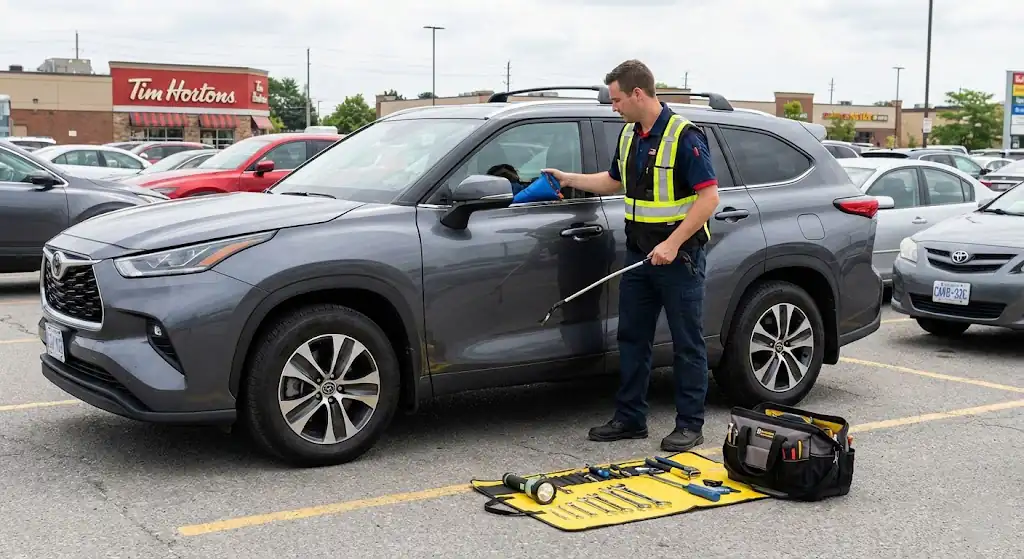
Car Lockout in Winter: Why You Shouldn’t Wait to Call for Help
It’s 7 PM on a January evening in Kitchener. You’re leaving the office, hit the lock button, close the door — and realize your keys are sitting on the passenger seat. The temperature is -18°C. The wind chill makes it feel like -27°C. You’re standing in a dark parking lot in a business suit. No coat, because it’s in the car. No gloves. Your phone has 22% battery. What do you do?
This exact scenario plays out hundreds of times every winter across Kitchener, Waterloo, and Cambridge. An auto lockout in summer is an annoyance. A car lockout in a Kitchener winter is a cold-exposure emergency. The difference between a 20-minute wait and a 90-minute wait can be the difference between mild discomfort and a hospital visit.
This guide explains why winter lockouts are more dangerous than most people realize, why common “wait it out” strategies fail in cold weather, and how to get back into your vehicle as fast as possible. For a full overview of all lockout options, costs, and prevention tips, see our companion guide on how to get back into a locked car in Kitchener.
How Fast Cold Becomes Dangerous During a Lockout
Most people underestimate how quickly cold affects the body, especially when you’re standing still without winter gear. Here’s the reality for a typical Kitchener winter night:
These timelines assume you’re standing still in whatever you were wearing inside — which is exactly the situation most winter lockout victims find themselves in. Your winter coat, hat, and gloves are inside the locked car. You’re in office clothes or a light jacket. Every minute matters.
⚠️ Special Risk: Children and Elderly
Children and elderly adults lose body heat much faster than healthy adults. If a child or elderly person is with you during a winter car lockout, call for help immediately and seek the nearest warm building while waiting. If a child is locked inside the vehicle, call 911 — this is an emergency in any season.
5 Reasons People Wait Too Long (And Why Each Is a Mistake)
When faced with a winter auto lockout, many people delay calling for help. Here’s why — and why each reason costs you:
Locked Out in the Cold? Every Minute Counts.
24/7 emergency car lockout across Kitchener, Waterloo & Cambridge — even at 3 AM in -25°C.
Winter Makes Lockouts Harder — Here’s How
Cold weather doesn’t just make lockouts more dangerous — it makes them physically harder to solve. Here are the winter-specific complications that professional technicians deal with:
🧊 Frozen Door Seals
Rubber weather seals freeze to the door frame, making it harder to create the gap needed for a long-reach tool. Technicians use de-icing solution and heated tools to soften the seal without tearing it.
🔒 Frozen Lock Mechanisms
Moisture inside the lock cylinder freezes, preventing the key from turning even if you had it. Internal lock rods can also seize. Never force a frozen lock — you’ll break the key or the mechanism.
📱 Phone Battery Drain
Lithium batteries lose charge rapidly in extreme cold. Your phone at 40% can drop to zero within 10–15 minutes at -20°C. Make your call first, before trying anything else.
🔑 Key Fob Battery Failure
Cold weakens key fob batteries. Your fob may have worked fine yesterday but can’t transmit a signal at -25°C. This causes “phantom lockouts” where the fob just stops responding.
Professional car lockout service near me technicians carry winter-specific equipment — de-icers, heated probes, backup battery packs, and portable lighting for dark parking lots. They’re prepared for every winter complication because they deal with dozens of them every cold snap.
Staying Safe While You Wait for Lockout Help
Once you’ve called for an emergency car lockout service, you’ll have a 20–30 minute wait. Here’s how to stay safe in the cold during that time:
- Get inside a building — if you’re near a mall, gas station, restaurant, or office building, go inside. Stay warm and wait for the technician’s call. Tell the dispatcher your location so they can find you.
- Keep your phone warm — put it inside a pocket close to your body. Cold kills phone batteries, and you need your phone to stay in contact with dispatch.
- Keep moving — if you can’t get inside a building, walk in place, swing your arms, stomp your feet. Movement generates body heat and delays hypothermia.
- Shield yourself from wind — stand on the downwind side of your vehicle or a building. Wind chill is the biggest factor in how fast you lose body heat.
- Ask someone nearby for help — don’t be too proud to ask a stranger in a parking lot if you can sit in their warm car while waiting. Most people will say yes.
💡 Tell Dispatch It’s a Cold Emergency
When you call (226) 476-0477, tell the dispatcher you’re locked out in the cold and don’t have winter gear. This is flagged as a priority call and the nearest available technician is dispatched immediately. Being specific about the urgency helps you get help faster.
Frozen Locks vs. Keys Locked Inside: Different Problems
Winter lockouts fall into two categories, and the solution is different for each:
For frozen locks, a quick temporary fix is to squeeze alcohol-based hand sanitizer into the keyhole — the alcohol melts ice on contact. For keys locked inside, there is no safe DIY fix in winter. Call a professional car unlocking service.
Is Your Winter Lockout Already Covered?
Before paying out of pocket, check these — you may already have auto lockout coverage:
- CAA membership — all tiers include lockout. Basic starts at ~$90/year.
- Insurance roadside add-on — typically $5–$15/month, covers lockout plus battery boost and short tows.
- New vehicle roadside assistance — most manufacturers include 3–5 years of complimentary coverage.
- Premium credit cards — Visa Infinite, World Elite Mastercard, and Amex Platinum often include roadside lockout.
Even with coverage, wait times through membership programs can reach 60–90 minutes during cold snaps when demand spikes. If you’re exposed to the cold and need faster service, call a local car lockout service near me directly at (226) 476-0477. For full details on coverage options, read our guide on how car insurance covers emergency roadside help.
Preventing Winter Lockouts: A Pre-Season Checklist
Invest 15 minutes this fall and you can avoid the entire situation:
- Get a spare key — keep it in your wallet or with a trusted person. A basic spare costs $5–$20. A transponder key costs $100–$250 at a locksmith but saves you from every lockout for years.
- Spray lock de-icer into your locks every October — graphite lubricant or silicone spray prevents moisture from freezing inside the cylinder. Takes 30 seconds per lock.
- Keep lock de-icer in your coat pocket — not in the car (where it does you no good when locked out). A small $5 bottle in your jacket can solve a frozen lock on the spot.
- Replace your key fob battery before winter — fresh batteries resist cold better. Most fob batteries cost $3–$8 and take 2 minutes to swap.
- Set up your vehicle’s phone app — remote unlock is the fastest fix for lockout situations. Set it up before you need it.
- Save a lockout number in your phone now — (226) 476-0477. When you’re freezing at 10 PM, you don’t want to be searching the internet with numb fingers.
Winter Lockout Service Areas
Our emergency car unlocking service covers every part of the Waterloo Region year-round:
Whether it’s a roadside assist lockout on Highway 401 at midnight, or a parking lot lockout at Fairview Mall at 7 AM — we cover it. For all other winter services including battery boost, emergency towing, and fuel delivery, check our full services list. For pricing, see our rates guide or use the cost estimator. Learn more about response times in our emergency response expectations guide, and check our affordable towing tips for ways to save. 24-hour service means help is always available.
Frequently Asked Questions
How dangerous is being locked out of your car in winter?
At temperatures below minus 15 degrees Celsius, frostbite can develop on exposed skin within 30 minutes and hypothermia symptoms can begin within 20 to 30 minutes. The risk increases dramatically without a winter coat, which is often locked inside the car. Children and elderly adults are at even greater risk.
How fast does a winter lockout service arrive in Kitchener?
Average arrival time is 20 to 30 minutes. Telling the dispatcher you are exposed to cold without winter gear can flag the call as a priority and may reduce wait time further. Once the technician arrives, the actual unlock takes 5 to 15 minutes.
Can cold weather cause my car doors to freeze shut?
Yes. Moisture in the rubber door seals can freeze overnight, bonding the door to the frame. Pulling hard can tear the seal, which is expensive to replace. Instead, press firmly around the edges of the door to crack the ice, or pour lukewarm water along the seal. Never use boiling water as it can crack glass and damage paint.
What should I do while waiting for lockout help in the cold?
Get inside a nearby building if possible. If not, stay on the downwind side of your vehicle, keep moving, and keep your phone warm inside a pocket close to your body. Ask nearby strangers if you can sit in their warm car while waiting. Tell the dispatcher your situation so the call is prioritized.
Can I use hand sanitizer to unfreeze a car lock?
Yes. Alcohol-based hand sanitizer contains isopropyl alcohol that melts ice on contact. Squeeze a small amount into the keyhole and onto the key itself, then insert the key gently. This works for frozen lock cylinders but not for keys locked inside the car.
Does cold weather affect key fob batteries?
Yes. Extreme cold reduces the output of the small battery inside your key fob. A fob that works fine at room temperature may fail to transmit a signal at minus 20 degrees Celsius. Replace key fob batteries before winter each year and keep a physical spare key as backup.
How can I prevent getting locked out of my car in winter?
Get a spare key and keep it in your wallet or with a trusted person. Spray lock lubricant into your door locks every fall. Keep a small bottle of lock de-icer in your coat pocket. Replace your key fob battery before winter. Set up your vehicle manufacturer’s phone app for remote unlock capability.
Is 24-hour emergency car lockout available in winter in Kitchener?
Yes. Kitchener Towing provides emergency car lockout service 24 hours a day, 365 days a year, including the coldest winter nights and holidays. After-hours winter calls may include a small surcharge but help is always available. Call (226) 476-0477 any time.
Why is a winter lockout more expensive than a summer lockout?
Winter lockouts often cost slightly more due to after-hours demand surcharges and the additional time needed to work with frozen seals and mechanisms. A standard winter unlock runs $75 to $120 compared to $50 to $90 in summer. The additional cost reflects both the difficulty and the urgency of the situation.
When should I call 911 instead of a lockout service in winter?
Call 911 if a child, infant, or pet is locked inside the vehicle in any weather — this is a life-threatening emergency. Also call 911 if you or someone with you is showing signs of hypothermia such as confusion, slurred speech, extreme shivering, or drowsiness. For more on recognizing cold emergencies, see the Government of Canada extreme cold health guide.
Don’t Stand in the Cold. Call Now.
Emergency car lockout — damage-free, any weather, any hour.
Kitchener • Waterloo • Cambridge • 24/7/365